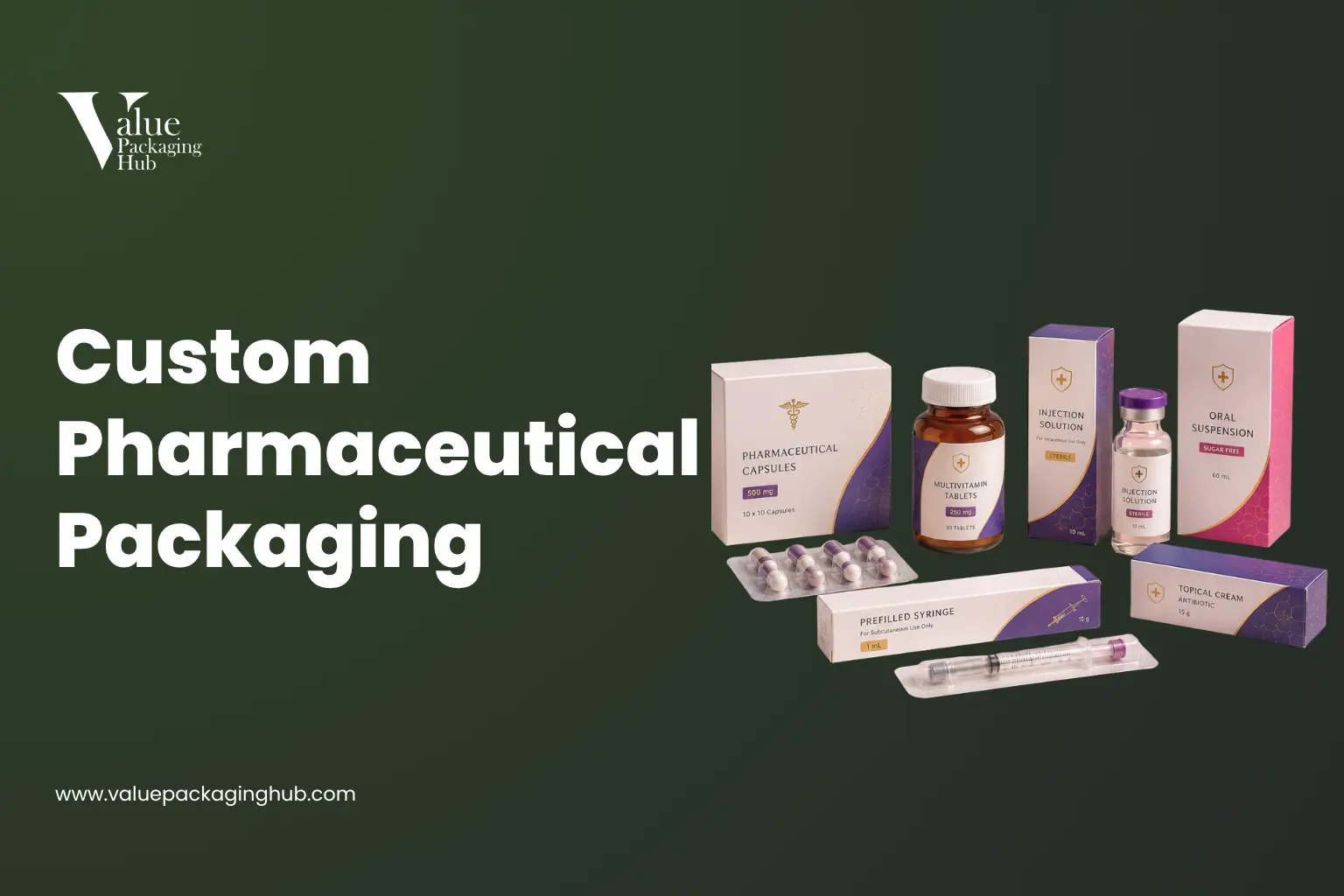
Custom Pharmaceutical Packaging Boxes: Types, Requirements & FDA Compliance
A single labeling error on a pharmaceutical box can trigger an FDA recall, a production shutdown, or worse — a patient safety incident. In an industry where the stakes are measured in lives, not just revenue, pharmaceutical packaging boxes do far more than hold a product. They protect drug integrity, communicate critical safety information, and must satisfy one of the most demanding compliance frameworks in American business: the FDA’s Current Good Manufacturing Practice (cGMP) regulations under 21 CFR Parts 210 and 211.
Whether you’re a pharmaceutical startup launching your first OTC product or an established manufacturer scaling production, understanding what makes a pharmaceutical packaging box compliant — and choosing the right type for your drug format — is non-negotiable. Here’s what you need to know.
Key Takeaways
- Pharmaceutical packaging boxes operate across three levels: primary (direct drug contact), secondary (outer carton), and tertiary (bulk shipping). Most custom boxes are secondary packaging.
- Secondary packaging receives the greatest FDA scrutiny because it carries all regulated labeling — including the National Drug Code (NDC), Drug Facts panel, tamper-evident features, and dosage instructions.
- The FDA requires pharmaceutical packaging to maintain drug integrity, prevent contamination, and comply with 21 CFR 201 labeling standards — non-compliance can result in recalls, penalties, and market exclusion.
- Child-resistant packaging is mandatory for most prescription drugs and specific OTC medications under the Poison Prevention Packaging Act (PPPA), governed by 16 CFR Part 1700.
- Custom pharmaceutical packaging boxes can be manufactured in folding cartons, rigid boxes, and corrugated formats — each suited to different drug types, distribution channels, and branding requirements.
- Partnering with a packaging provider that understands FDA compliance and offers free design consultation can save pharmaceutical brands significant time and cost during the approval process.
What Are Pharmaceutical Packaging Boxes and Why Do They Matter?
Pharmaceutical packaging boxes are custom-designed containers used to store, protect, and present drug products throughout the supply chain — from the manufacturing floor to the pharmacy shelf to the patient’s hands. Unlike general consumer packaging, they operate under strict regulatory oversight because their failure can directly compromise patient safety.
The FDA classifies pharmaceutical packaging into three levels. Primary packaging is in direct contact with the drug — think blister packs, vials, ampoules, and bottles. Secondary packaging is the outer layer that encloses and protects the primary package — folding cartons, rigid boxes, and printed inserts. Tertiary packaging handles bulk shipping and storage — corrugated master cases and pallets.
For most pharmaceutical brands ordering custom boxes, secondary packaging is the focus. And it’s where the FDA places the most scrutiny, because secondary packaging carries virtually all of the information a patient, pharmacist, or regulator reads: dosage instructions, warnings, expiry dates, batch codes, and the National Drug Code. According to National Drug Control Directory, pharmaceutical packaging requirements experts at Arkay, secondary packaging receives the greatest FDA attention precisely because it carries the product name, logo, National Drug Code, barcode, patient package insert, medication guide, and instructions for use.
Getting it right from the start saves pharmaceutical companies from costly redesigns, compliance delays, and potential enforcement action.
Types of Pharmaceutical Packaging Boxes
Not every drug product needs the same box. The right format depends on the drug’s formulation, distribution channel, required protection level, and branding goals.
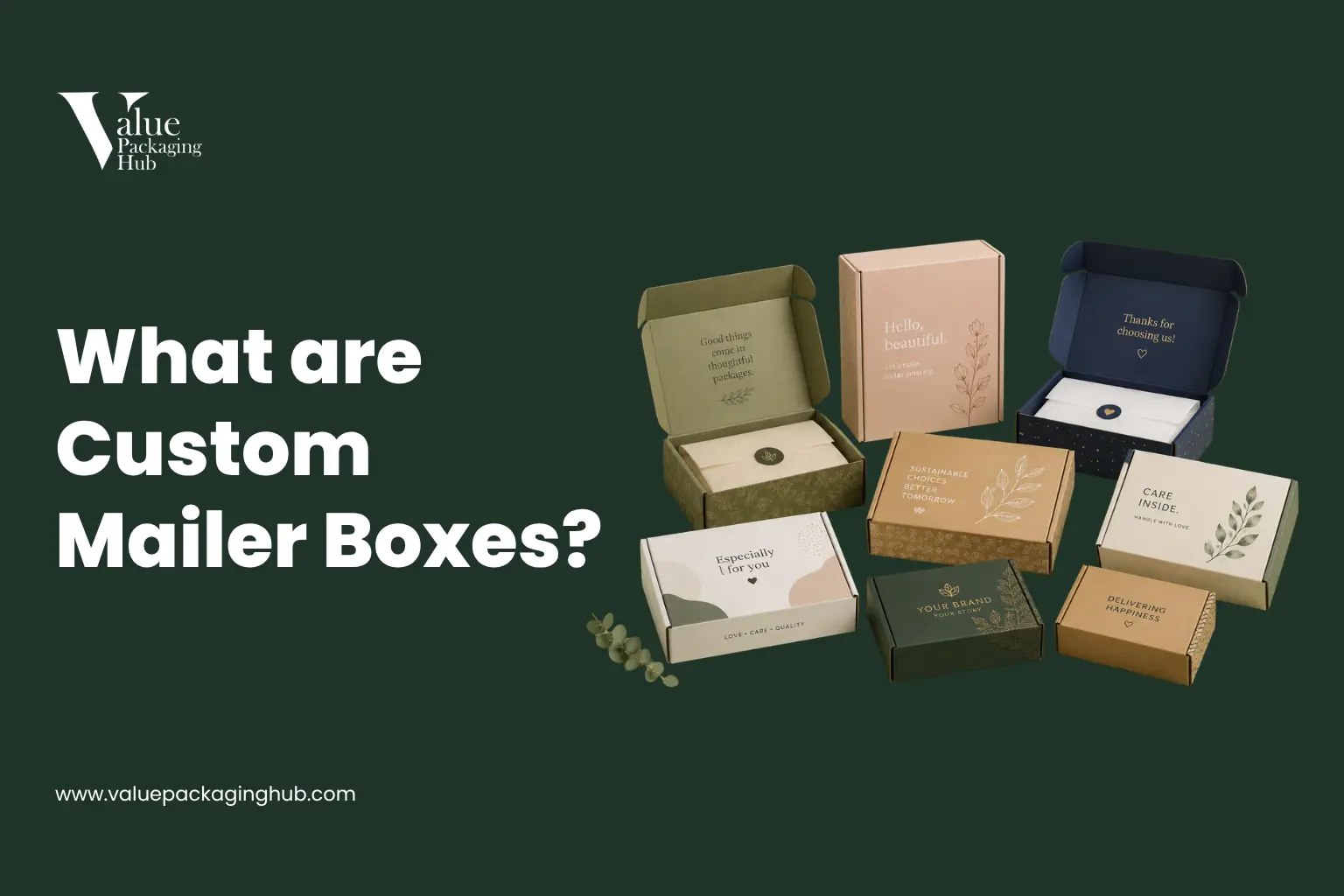
Folding Cartons: The most common secondary pharmaceutical packaging. Folding cartons are made from paperboard and are used to house blister packs, bottles, vials, syringes, and sachets. They offer an excellent print surface for full-color branding, regulatory text, barcodes, and patient information leaflets. They’re cost-effective at scale, lightweight, and compatible with automated cartoning lines. Explore custom pharmaceutical packaging options for folding cartons sized to your specific product dimensions.
Rigid Boxes: Used for premium pharmaceutical products, diagnostic kits, medical devices, and specialty medications. Rigid boxes — made from thick chipboard — offer superior structural protection and a high-end presentation. They’re common in clinical trial packaging, nutraceuticals, and OTC products positioned as premium. Rigid boxes can incorporate magnetic closures, foam inserts, and spot UV finishes while maintaining the FDA labeling surface requirements.
Corrugated Pharmaceutical Boxes: Used primarily as tertiary packaging for bulk shipping and storage, corrugated boxes can also serve as secondary packaging for large-format products like IV bags, liquid medications, or multi-unit hospital packs. Their fluted construction provides excellent protection against compression and impact during transit — critical for maintaining drug integrity across long-distance distribution.
Tuck-End and Sleeve Boxes: Straight-tuck and reverse-tuck end boxes are efficient and economical secondary packaging for tablets, capsules, and topical products. They’re quick to assemble, available in a wide range of sizes, and easy to print with all required regulatory information. Explore custom boxes by industry to find the right format for your specific pharmaceutical application.
FDA Compliance Requirements for Pharmaceutical Packaging Boxes
FDA compliance is not optional — it’s the baseline. <cite index=”64-1″>The FDA requires that pharmaceutical packaging maintains product integrity throughout its shelf life, provides adequate protection against contamination or degradation, and is compatible with the drug or device per CFR 211.94.</cite>
Here are the core compliance requirements every pharmaceutical packaging box must address:
21 CFR Part 211 — cGMP for Finished Pharmaceuticals This regulation governs the design, materials, and production of pharmaceutical packaging. It requires that packaging be produced under clean, controlled conditions with full documentation and traceability. Packaging materials must not react with, absorb, or adsorb the drug product in ways that could alter its safety, identity, strength, quality, or purity.
21 CFR Part 201 — Drug Labeling Drug packaging labels must provide complete, accurate, and legible information. Prescription drugs must include product identity, quantity, strength, dosage form, manufacturer details, and directions for use. Over-the-counter drugs require a Drug Facts panel listing active ingredients, purposes, warnings, and directions.
Tamper-Evident Packaging The FDA requires tamper-evident features on most OTC drug products under 21 CFR 211.132. This means packaging must include visible indicators — sealed carton flaps, shrink bands, or breakable caps — that show whether the package has been opened or altered. For pharmaceutical packaging box manufacturers, this means tamper-evident closures must be engineered into the structural design, not added as an afterthought.
Child-Resistant Requirements (PPPA) Under the Poison Prevention Packaging Act, most prescription medications and specific OTC drugs must use child-resistant packaging. The Consumer Product Safety Commission enforces this under 16 CFR Part 1700. Most prescription drugs, OTC medications containing aspirin, acetaminophen, ibuprofen, and iron-containing supplements (with more than 250 mg of elemental iron per container) require child-resistant packaging.
Drug Supply Chain Security Act (DSCSA) — Serialization As of 2025-2026, the DSCSA requires all prescription drug packages to carry unique product identifiers — serialized 2D barcodes — that enable track-and-trace throughout the supply chain. This must be incorporated into your pharmaceutical packaging box design from the outset, not retrofitted later.
How to Choose the Right Pharmaceutical Packaging Box
Selecting the right box type comes down to five key decisions:
- Drug formulation — Tablets and capsules typically use folding cartons over blister packs or bottles. Liquids need corrugated or rigid outer boxes. Injectables and vials need custom-fitted inserts.
- Distribution channel — Retail pharmacy packaging prioritizes shelf presence and branding; hospital or clinical packaging prioritizes stackability, tamper evidence, and barcode scanning.
- Compliance requirements — Child-resistant, tamper-evident, and serialization needs may narrow your format options. Work with your packaging partner early to confirm compliance before investing in design.
- Volume and MOQ — High-volume pharmaceutical runs suit folding carton production lines. Smaller clinical trial batches or specialty medications benefit from low-minimum-order packaging suppliers who offer [Suggested internal link: “low MOQ custom packaging” → service/get-a-quote page] without sacrificing compliance.
- Branding and market position — OTC consumer drugs live or die on shelf appeal. Rigid boxes, soft-touch finishes, and embossed branding elevate perceived quality and patient trust.
Pharmaceutical packaging must also demonstrate compatibility with drug products through stability studies and extractables and leachables testing, and the FDA requires evidence that packaging components do not adversely affect drug safety, identity, strength, quality, or purity. Confirm material compatibility with your drug product before finalizing your packaging specification.
For a broader look at how packaging choices impact compliance across industries, the FDA’s guidance on container closure systems for human drugs and biologicsprovides the definitive regulatory framework for packaging material selection.
What to Look for in a Pharmaceutical Packaging Partner
Most pharmaceutical compliance failures don’t happen in the lab — they happen in the box. Choosing the right packaging manufacturer matters as much as the drug formulation itself.
When evaluating a custom pharmaceutical packaging supplier, look for:
- Regulatory knowledge — Your supplier should understand 21 CFR 201, 21 CFR 211, DSCSA serialization, and child-resistant standards without you having to explain them.
- Free design consultation — FDA-compliant pharmaceutical packaging requires precision in label placement, font sizing, barcode dimensions, and tamper-evident integration. A supplier that offers free design support significantly reduces compliance risk at the design stage.
- Free 3D samples — Before committing to a full run, validate the structural design, label placement, and fit with your primary container using physical samples.
- Low minimum order quantities — Clinical trials, new drug launches, and specialty medications don’t always require 50,000 units. Low MOQ partners give pharmaceutical brands the flexibility to test and iterate without overcommitting.
- Free USA delivery — For pharmaceutical brands distributing within the United States, a supplier with free nationwide delivery reduces per-unit logistics cost and simplifies supply chain management.
At Value Packaging Hub, we work with pharmaceutical and healthcare brands across the USA to deliver custom pharmaceutical packaging boxes that meet FDA standards — with free design consultation, free 3D samples, low MOQ, and free delivery nationwide.
Conclusion
Pharmaceutical packaging boxes sit at the intersection of patient safety, regulatory compliance, and brand credibility — and getting them right requires more than choosing a box style. From the FDA’s cGMP requirements under 21 CFR Parts 210 and 211, to tamper-evident mandates, child-resistant standards under the PPPA, and DSCSA serialization requirements now enforced across the US supply chain, pharmaceutical packaging is one of the most regulated product categories in American commerce.
The good news: with the right packaging partner, compliance doesn’t have to be complicated. The right custom pharmaceutical packaging boxes protect your drug product, satisfy FDA requirements, and build patient trust — all from the moment the box is picked up off the shelf. Ready to get started? Explore Value Packaging Hub’s [Suggested internal link: “custom pharmaceutical packaging solutions” → pharma service page] and request your free quote today.